
From Beliefs to Business Results: Your Company’s Secret Weapon for Growth
How the Brand Harmony Results Model Drives Profitable Results
After three decades of advising companies across many industries, I've learned this: Most businesses are sitting on enormous untapped profit. I call it "Latent Profit" - the results you're leaving on the table because your employee experience, customer experience, and business results aren't aligned.
The Brand Harmony Results Model

The Brand Harmony Results Model is my secret weapon for unlocking that latent profit. I've used it to help hundreds of companies clarify their strategy, unify their customer experience, and align their teams—dramatically improving their bottom line. It's the intellectual framework behind my book Brand Harmony, and it remains my most reliable business strategy tool because of one simple fact: it reveals exactly where companies are losing money—and how to fix it.
The model traces a clear, causal chain from employee experience all the way through to business results. Most leaders focus on one piece of this chain while ignoring the rest. That fragmentation costs them dearly. Let me show you how the model works, working from right to left, starting with business results.
The First Step: Customer Actions Are the Direct Driver of Business Results
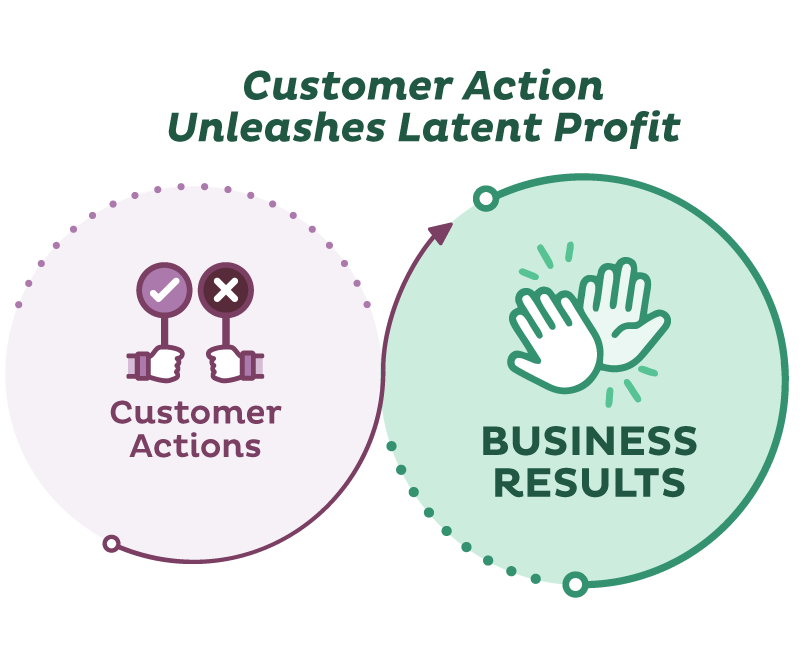
Your business is filled with Latent Profit - the untapped potential to create more powerful results - and customer action is the key driver that unleashes that latent profit.
Customer action is the most powerful driver of business results, such as when customers:
Take time to learn about your product
Buy your product
Endorse your product enthusiastically
Key question: What are the most important things your customers could do to improve your results?
The Second Step: Customer Beliefs Drive Customer Actions
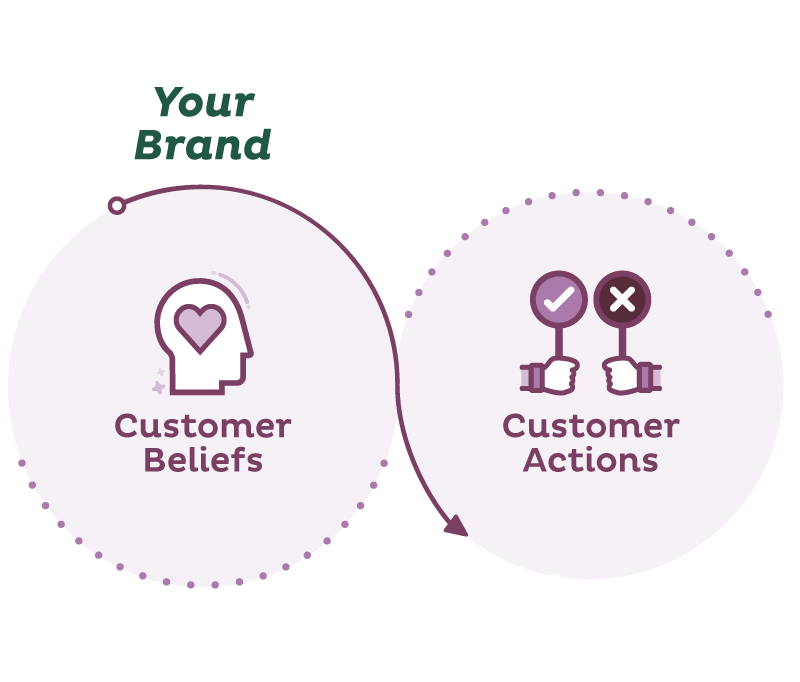
Why would customers act in ways that improve your results?
The answer is simpler than most executives realize. We can look at our everyday lives to understand the answer to this question. The actions people take are driven by their beliefs.
When people have clear, compelling and motivating beliefs about your company, they will commit to you and take actions that improve your business results.
This leads to my simple, straightforward definition of a brand: Your brand is not what you say you are, it’s what your customers believe you are. You can say whatever you want about your company or products, but that doesn’t matter unless customers believe it and act on it.
Key question: What could your customers believe about you that would motivate them to commit to you?
The Third Step: Brand Harmony Creates Strong Customer Beliefs
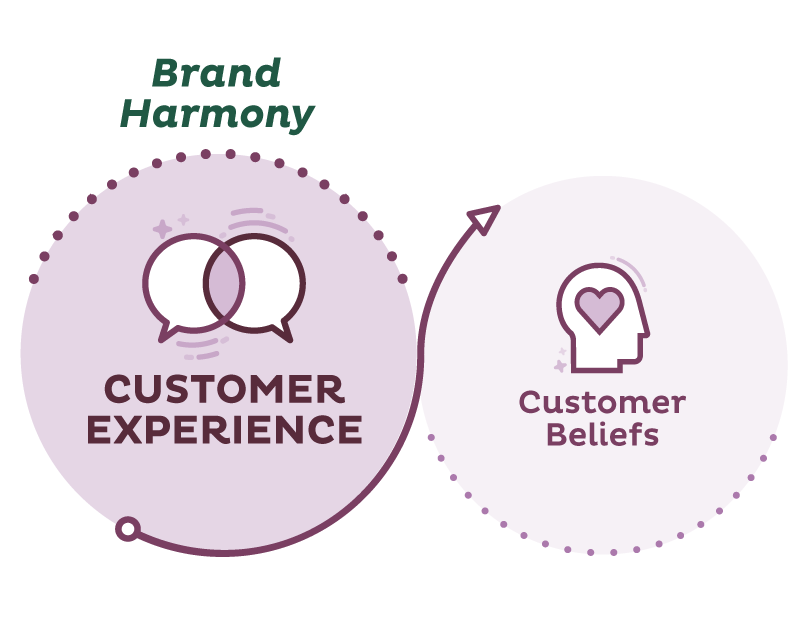
Question: What causes your customer to have clear, compelling, motivating beliefs about your company and its products?
Answer: A unified customer experience, where all interactions customers have with your company blend to tell one clear, unified story. I call this experience Brand Harmony.
Let me show you what I mean.
George Seurat's pointillist masterpiece A Sunday Afternoon on the Island of La Grande Jatte is a wonderful metaphor for Brand Harmony
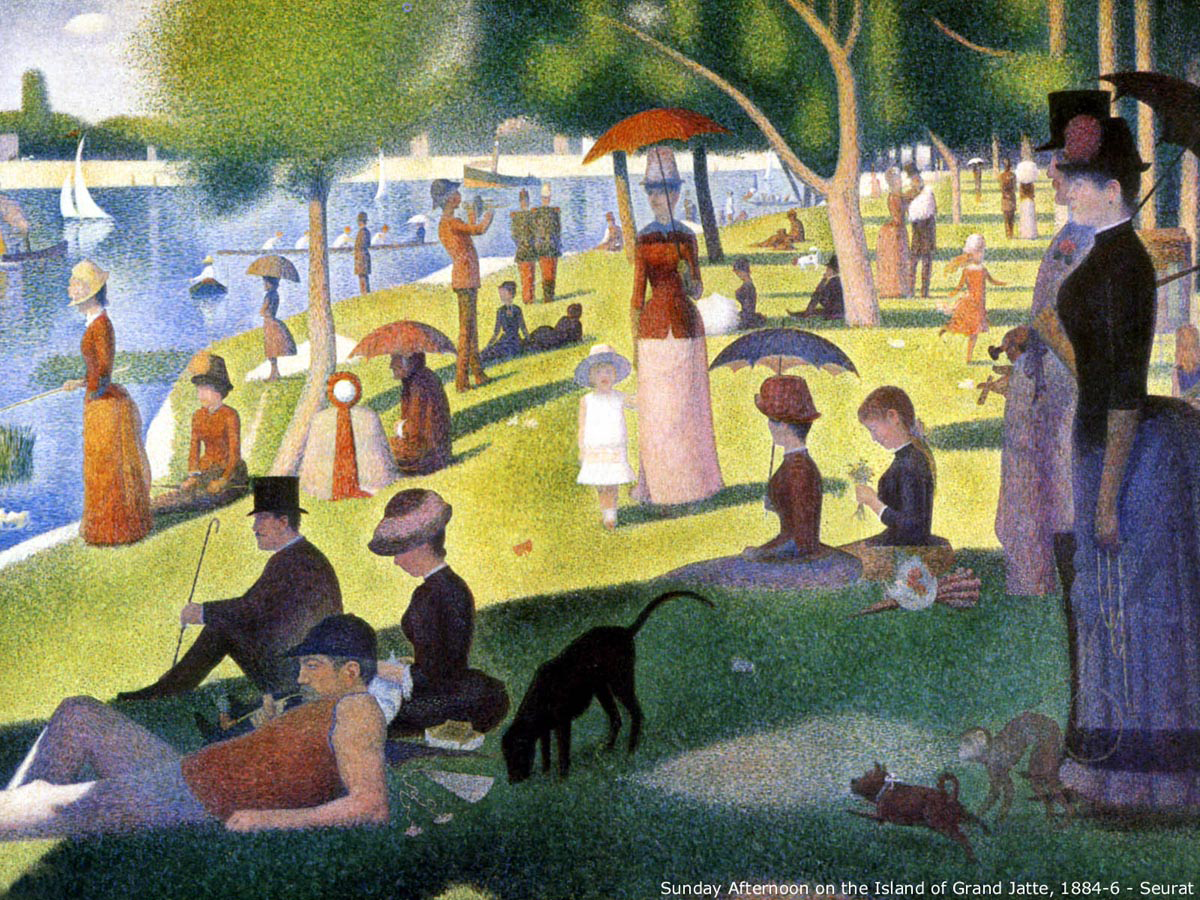
Seurat didn’t paint trees or people or umbrellas. He painted dots, and your mind assembles those dots into a total picture. Similarly, your customers assemble all points of contact into one overall picture of your company in their minds.
Every touchpoint customers have with your company contributes to your customer experience:
Product
marketing
sales
service
operational
financial
administrative
“Everything is marketing,” not because I say so, but because your customers use all of these touchpoints to evaluate you.
Key question: What enhancements and improvements can you make to your customer experience to give them a feeling of Brand Harmony?
The Fourth Step: Every Employee’s Actions Create Your Customer Experience
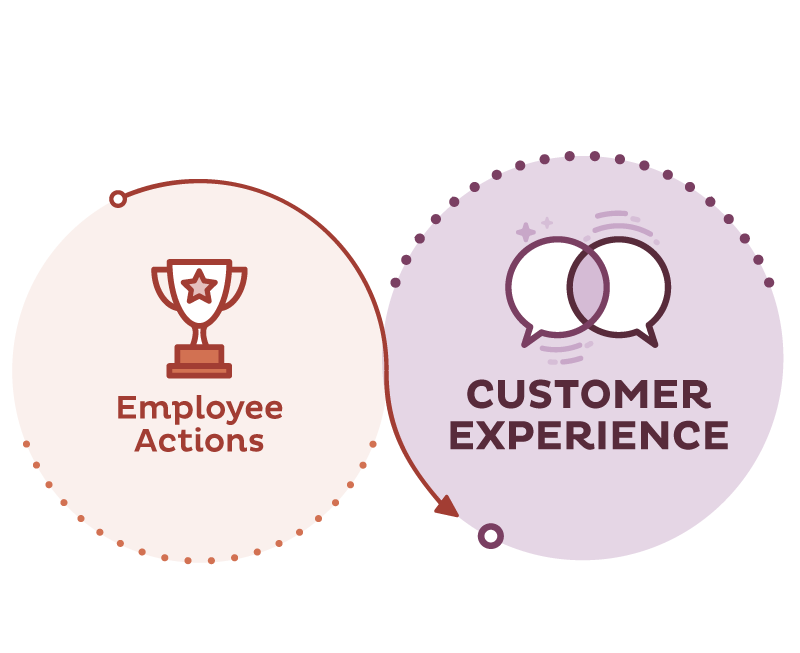
Who creates your customer experience?
Every one of your team members—even those who never interact directly with customers.
This observation leads to one of the most important insights in the model: Every employee is actually "in marketing."
Not because of their job title, but because they contribute to the customer experience that shapes beliefs about your brand. The person who answers the phone, the engineer who designs the product, the accountant who sends the invoice—they're all creating touchpoints that customers use to evaluate you.
Key questions: How well are your team members’ actions supporting a customer experience of Brand Harmony? What enhancements and improvements to these actions do you need to focus on?
The Fifth Step: Your Internal Brand Motivates Employee Actions
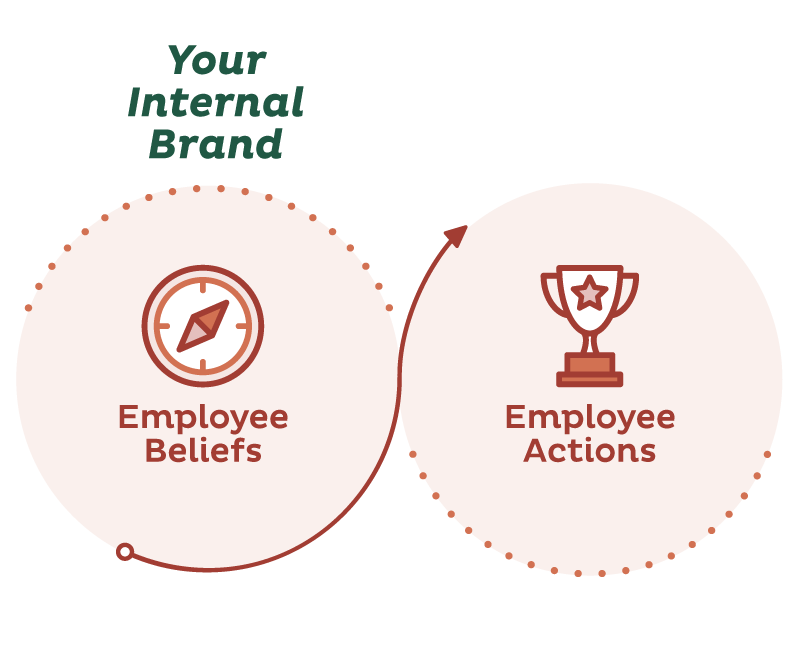
Why would your employees act to create Brand Harmony for your customers?
For the same reason your customers act: Their beliefs.
Here's another way to think about it: Just as your brand is not what you say you are but is what your customers believe you are, your “internal brand” is what your employees believe you are—not what you say you are in mission statements or values posters.
Key question: What do you want your team members to believe that would help them create an overall unified experience of Brand Harmony for your customers?
The Sixth Step: Brand Harmony Inside Your Company Builds Your Internal Brand
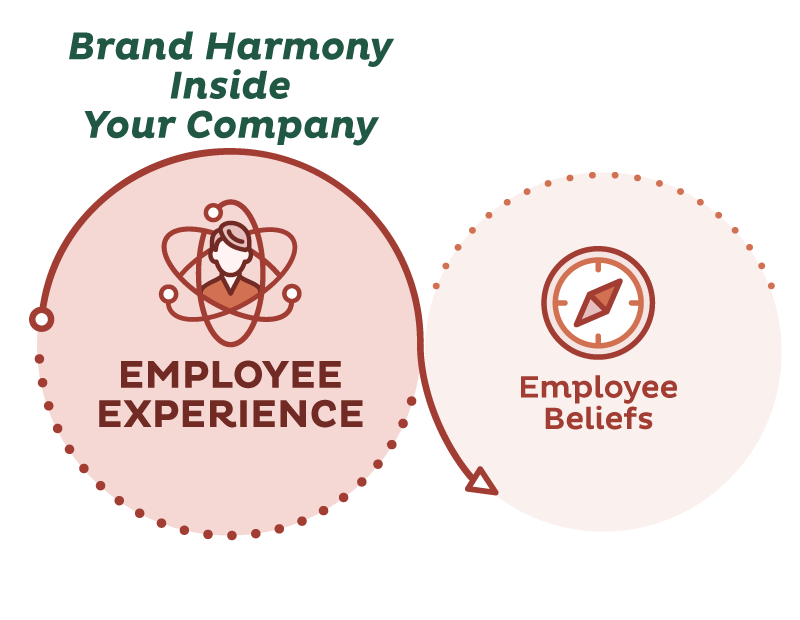
How do you encourage employees to have Brand Harmony beliefs?
The same way you nurture strong customer beliefs: through an employee experience of Brand Harmony.
You need to ensure that all aspects of your employee experience blend to communicate a clear, compelling and motivating story to your team members, one that motivates them to act.
Your employee experience includes all contacts team members have with the company:
internal verbal and written communications
the work environment
how they are treated by their bosses and management
the people they work with
the situations they are put in with customers
their compensation and benefits
Key question: What enhancements and improvements can you make to your employee experience to improve Brand Harmony inside your company?
Putting the Brand Harmony Results Model to Work
The Brand Harmony Results Model gives you something most business frameworks don't: a clear line of sight from employee experience all the way through to business results. It's not a theory about what might work. It's a map of how business success actually happens.
The model reveals where the breakdowns are occurring in your business—and more importantly, where your biggest opportunities lie.
Are you losing customers because they don't believe in you strongly enough?
Is that belief problem rooted in a fragmented customer experience?
Are your employees creating that fragmented experience because their own experience of your company isn't unified?
Most companies are pouring resources into symptoms, while ignoring root causes. The Brand Harmony Results Model helps you invest strategically, focusing your energy where it will generate the greatest return.
Over the past 30 years, I've used this model to transform businesses. Not through magic, but through clarity. When you understand the causal chain from employee experience to business results, you stop guessing where to invest. You stop throwing money at symptoms, while root causes bleed you dry. You start making strategic decisions that unleash your latent profit.
That clarity becomes your competitive advantage.
Want to explore where your latent profit is hiding? Let's talk.